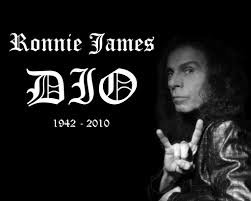
A Dio: A sociosemiotic/ phenomenological account of the formation of collective narrative identity in the context of a rock legend’s memorial by George Rossolatos

God is dead, but, contrary to Nietzsche’s diagnosis, ‘we’ didn’t kill him; he died of cancer. This perhaps crudely cold and off-putting opening does not refer to a naively metaphorically constituted transcendental abstraction, but to a spatio-temporally situated rock legend, Ronnie James Dio. This study aims at contributing to the burgeoning research field of memory and collective identity by providing a sociosemiotic account of the formation of collective narrative identity.

Review Essay: Things Fall Apart by Chinua Achebe by Benson O Igboin and Oluchi J. Igili

The life of Unoka, the father of Okonkwo, the latter being the protagonist of Chinua Achebe’s Things Fall Apart, had been dismissively concluded as inconsequential. This is evident in the fact that Unoka’s presence, as the author presented it in the novel, apparently ended in the very first chapter. But the meta-life of Unoka formed an original and inevitable basis for the thought and consequences that pervaded the life of Okonkwo and his first son, Nwoye

From Remembering to Memory by Way of Culture. A Study in Cognitive Semiotics by Göran Sonesson

Cognitive semiotics is a term increasingly being used for a field combining some of the insights, theories, findings and methods of classical semiotics and of cognitive science. The notion of memory plays an important part in at least one of the theories of classical semiotics, that of Lotman, which can be connected both to earlier philosophical (notably phenomenological) reflection and to psychological theories. It can also be related to ideas of distributed and situated cognition in contemporary cognitive science.